

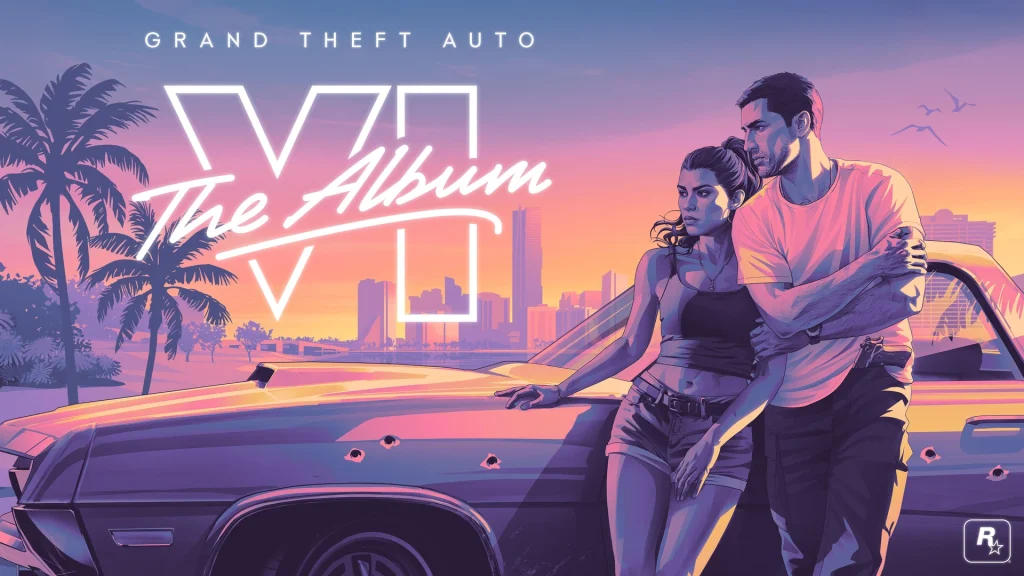
Rockstar Games has announced Grand Theft Auto VI: The Album for November 19, the same day as the game’s confirmed launch. The release gives the music heard around Vice City and Leonida a formal place outside the game while preserving the series’ tradition of using radio, score and licensed tracks to define travel. The announcement is complete and current. What remains to be judged is how the album represents the difference between music written for the story, songs heard through stations and the sound that accompanies free exploration.
Radio music can make every part of Leonida feel different
Grand Theft Auto uses radio to make repeated routes feel different depending on the station, time and current mission. A long drive can carry comedy, local information or tension without interrupting control.
An album can preserve the most important pieces, but it cannot reproduce every transition created by a live station. Its track order should therefore work as an intentional listening sequence rather than a simple export of files. Station identity comes from presenters, transitions and the order in which songs appear as much as from individual tracks. A separate album can select highlights while the in-game radio preserves the longer flow of a journey through Leonida.
Vice City needs a sound beyond nostalgia
The setting naturally invites comparison with earlier visits to Vice City and their famous music selections. GTA VI can acknowledge that history without allowing familiar decades to define every district and character.
Current Leonida needs contemporary voices, local rhythm and contrast between tourist surfaces and less visible communities. The soundtrack becomes convincing when a song feels chosen for this place and not only for the player’s memory of another game. Nostalgia is most effective when it supports the new setting instead of replacing it. Music from earlier eras can sit beside current artists, but the final selection should describe this version of Vice City and the people living there now.
Original score and licensed radio serve different jobs
A composed score can follow danger, silence and narrative change with precision. Licensed songs give the player choice and make the world feel connected to culture beyond the main plot.
The album announcement should eventually clarify which kinds of material are included and whether separate releases will cover different parts. Clear credits are also important because many artists, producers and performers may contribute to the final sound. Score and radio can also overlap at carefully chosen moments, allowing a mission to move from authored tension back into player-controlled travel. Credits should make those different contributions easy to identify when the complete listing is published.
Characters are revealed by what they hear
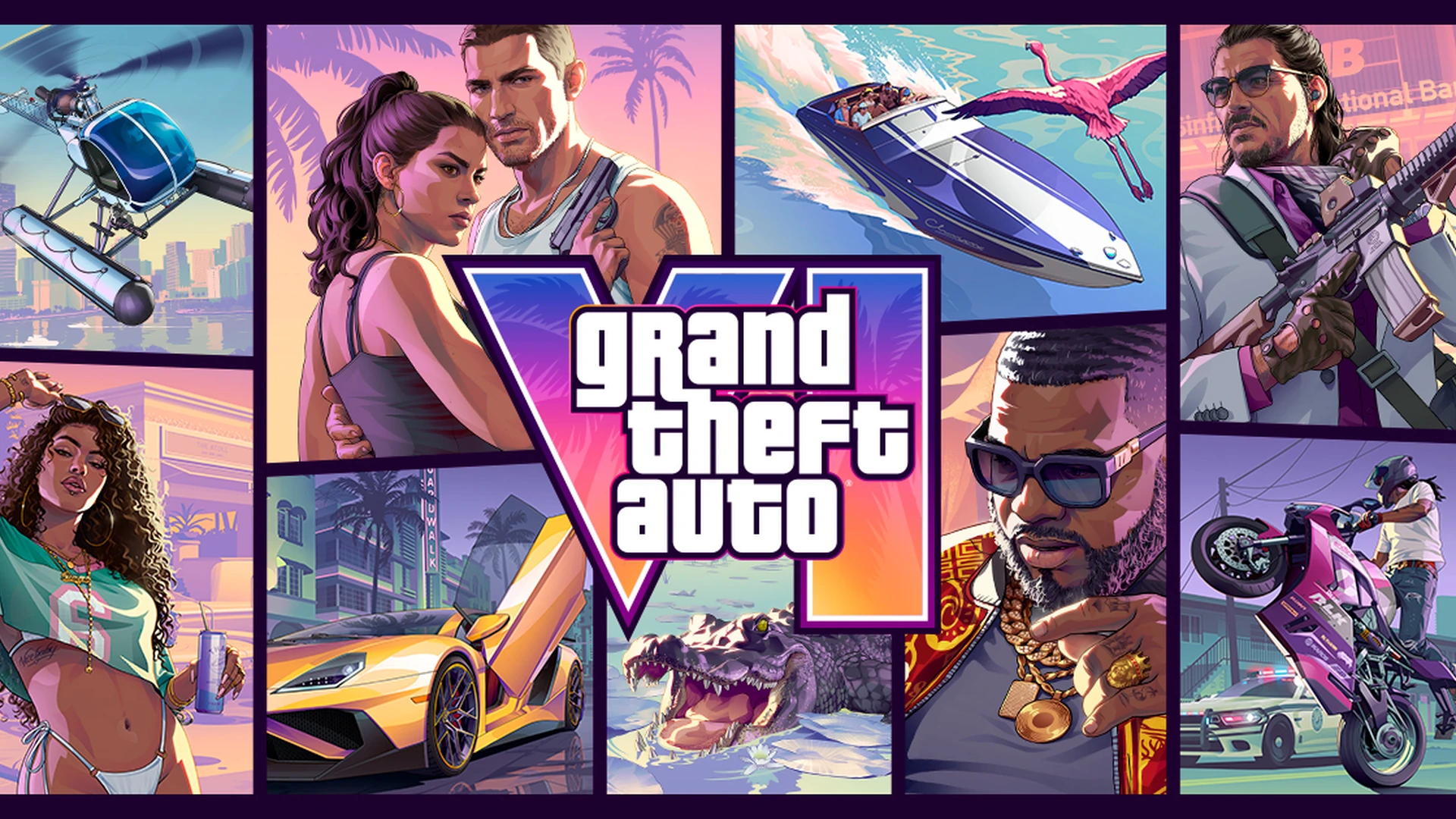
Jason and Lucia can occupy the same car while responding differently to a station, presenter or song. Small reactions can communicate background and mood without a long conversation explaining personality.
Radio advertising and talk segments can also show how Leonida understands crime, celebrity and public fear. Those details are strongest when they remain optional enough to reward attention rather than stop a mission for exposition. Character reactions do not need to judge every song. A brief change in conversation, a chosen station or a refusal to switch it can reveal taste and history while leaving the player free to keep driving.
The joint release lets players discover the music with the game
The album arrives on November 19 alongside the game instead of months after players have learned every track. Listeners may encounter music first through a streaming service or first through a mission, producing two different associations.
Rockstar can preserve discovery by limiting advance spoilers while still publishing accurate credits and availability details. Regional streaming catalogues should be checked close to launch because music licensing can differ between services and countries. The simultaneous November 19 release means early listeners may encounter a track outside its story context. Rockstar can protect major narrative moments by publishing the album without descriptions that reveal where every piece is used.
A good release should stand alone without losing context
The strongest game albums can be enjoyed away from the screen while still recalling a specific road, character or turning point. GTA VI has an unusually large world in which to create those associations.
The announced date and title are confirmed, but the complete track list remains an official detail to watch rather than guess. When Rockstar publishes it, the useful question will be how the sequence balances story, radio culture and the freedom of Leonida. Until the official track list appears, specific artists and songs should not be presented as confirmed. The announcement establishes the date and the album itself; the final composition remains a separate verified detail for launch.