

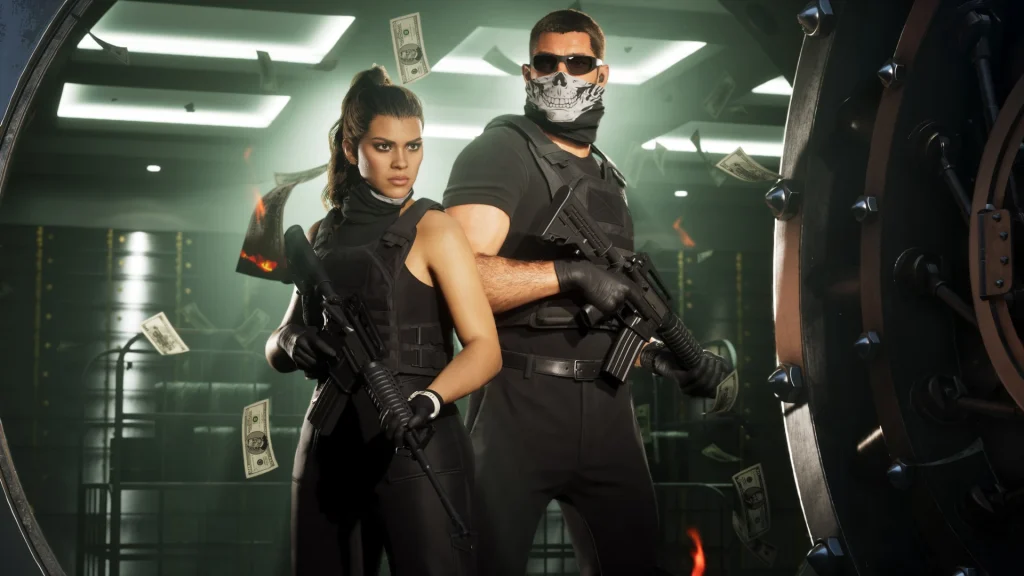
Rockstar’s extended look at Grand Theft Auto VI places Jason Duval and Lucia Caminos at the centre of a Leonida story shaped by money, trust and the consequences of a job that goes wrong. The footage is already available and should be treated as a completed presentation, not as a future reveal. It introduces supporting figures, businesses and districts while leaving the full plot unresolved. The most promising detail is how ordinary routines sit beside crime: homes, roads, clubs and work all create pressure before a weapon appears.
Jason and Lucia share risk without becoming identical
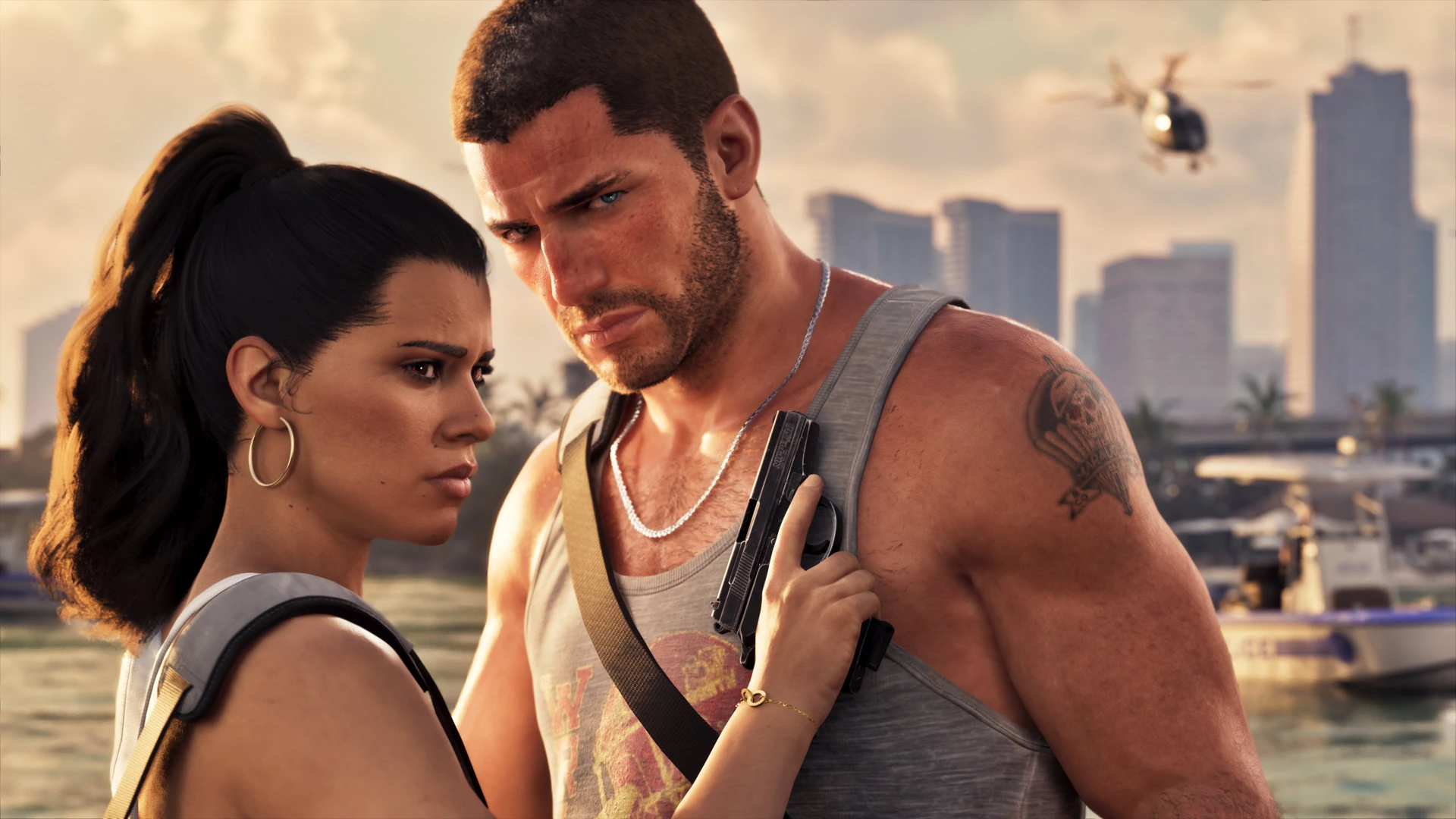
The two leads are connected by trust and by practical dependence after events make a simple life harder to maintain. Their relationship can support cooperation while allowing different motives and thresholds for danger.
A two-character story works best when each person changes the meaning of the same decision. The extended footage suggests partnership, but the finished campaign must show disagreement without reducing either lead to a plot device. Shared danger can expose differences in how Jason and Lucia value security, loyalty and opportunity. Those differences should influence playable choices and conversations rather than existing only in promotional character descriptions.
Leonida is organised through communities
The presentation moves beyond a central skyline and introduces neighborhoods, highways, coastal areas and businesses. Each place can create its own traffic, witnesses, police response and opportunities for escape.
A large map feels coherent when players understand why people live and work in each district. Recognizable routines also make disruption more meaningful because the world appears to continue when the leads are not present. Roads and communities can connect the map through ordinary movement as well as missions. Traffic density, weather and local businesses help one district feel different from another before the player reaches a scripted event.
| Confirmed element | Story function |
|---|---|
| Jason and Lucia | Shared risk with different perspectives |
| Leonida districts | Distinct communities and routes |
| Supporting cast | Separate networks and ambitions |
| Failed job | Starting point for a wider conspiracy |
Supporting characters widen the economy of the story
Figures such as Cal Hampton, Boobie Ike, Dre’Quan Priest and Raul Bautista bring different ambitions and networks around the protagonists. They connect crime to entertainment, property, information and organized work rather than presenting every contact as the same mission giver.
A useful supporting cast creates competing routes and consequences instead of waiting passively for Jason or Lucia to call. The extended look establishes identities, while their true loyalties should remain part of the campaign’s discovery. Each supporting figure should offer a recognisable relationship and source of influence. Overlapping interests can create conflict naturally, while identical mission structures would make the large cast feel interchangeable.
Ordinary places can create the strongest tension
A home, a vehicle or a local business can become dangerous when money is short or trust begins to fail. These spaces allow conversation and observation before an action sequence changes the pace.
Rockstar’s worlds are most convincing when small details support the same social conditions described by the story. The player should be able to notice those conditions while exploring without every object becoming an explicit collectible. Quiet routines give the story a baseline from which danger can grow. Returning to a familiar home or business after a failed job can show consequences through changed behaviour and access without requiring a long explanation.
Criminal decisions need lasting consequences
The official premise begins with a job going wrong and a conspiracy extending across Leonida. That structure can connect individual missions if evidence, relationships and public attention continue to matter afterward.
Consequences do not have to remove freedom, but they should change which approach feels safe or which contact remains available. A campaign built only from isolated spectacular missions would weaken the trust and pressure emphasized in the presentation. Lasting consequences are clearest when contacts, police attention or available routes respond to what happened. They do not need to remove open-world freedom, but they should make the wider conspiracy visible between major missions.
The footage sets questions rather than answering the plot
The extended look confirms characters, tone and several parts of Leonida without explaining the final arc. That is enough material for analysis and not enough for claims about betrayal, endings or the complete map.
Future official information can add systems and locations, while speculation should remain clearly separate from confirmed facts. The finished game will be judged by whether these communities and relationships continue to matter during free play as well as scripted missions. The presentation confirms the named characters and broad premise, not every relationship or location. Treating unanswered questions as open keeps the analysis accurate and leaves the campaign’s central discoveries intact.