

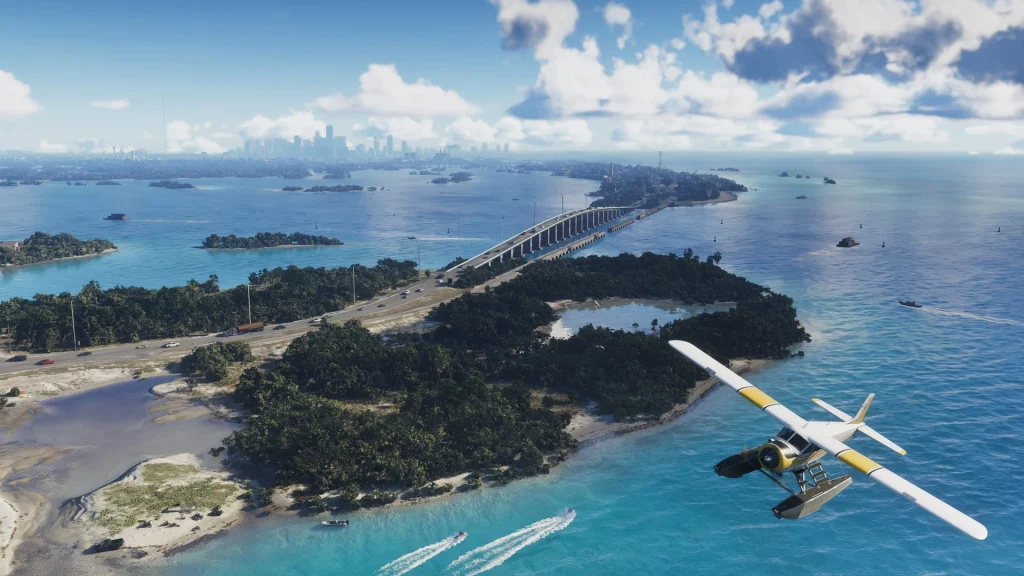
Rockstar’s description of the Leonida Keys presents the tropical archipelago as more than a bright holiday backdrop. The region links shallow water, bridges, marinas, bars and an older smuggling economy. Jason’s work for local drug runners and Brian Heder’s boatyard give that geography a practical connection to the story. If the final game treats boats as everyday transport rather than occasional mission props, the Keys can change how players plan movement, escape and observation.
An archipelago creates routes that a road map cannot explain
On the mainland, a waypoint usually suggests one obvious driving direction. Islands complicate that assumption. A destination may be physically close across water but far away by bridge, while a fast boat can avoid road checkpoints at the cost of exposure and a difficult landing. The player needs enough map information to compare those options without having every useful shoreline converted into a glowing icon.
Good regional design makes the choice situational. A car carries familiar weapons and offers quick access to shops; a boat may cross the area faster but requires a safe dock or beach. Weather, visibility and police attention can change the answer. The Keys become meaningful when water and asphalt form one connected travel system instead of two separate maps that meet only during scripted missions.
Brian Heder’s boatyard can anchor the local economy
Brian is described as a veteran smuggler who operates from his boatyard. That detail gives the region a believable point of contact for repairs, storage, jobs and information. A working yard can show which vessels belong to fishing, tourism and illicit transport without requiring a long explanation. It can also make ownership matter: borrowing a small skiff for a quiet crossing should feel different from taking a conspicuous performance boat.
The yard does not need to become a universal base that solves every logistical problem. Its value comes from local expertise. Brian may know channels that remain passable at speed, coves hidden from the highway or people who notice unusual Coast Guard activity. Those advantages should help inside the Keys while leaving other parts of Leonida to develop their own networks.
| Regional element | Possible gameplay value |
|---|---|
| Bridges | Fast road access with predictable choke points |
| Shallow channels | Boat routes that reward local knowledge |
| Marinas and beaches | Different ways to transfer between land and water |
| Boatyard | Storage, repairs and contacts tied to the local economy |
Smuggling works best when concealment is a route problem
A convincing smuggling mission is not improved simply by adding a larger number of pursuing vehicles. The stronger challenge is deciding where attention can be avoided. A cargo boat might blend with normal traffic near a marina, then become obvious in open water. A short road transfer can bypass a patrol but expose the shipment at a bridge. The player should read the environment and choose when to move rather than follow a corridor of scripted explosions.
Cal Hampton’s interest in Coast Guard communications suggests another layer of information. Intercepted chatter could warn about a search area without revealing an exact safe line. That leaves room for judgement: wait for a patrol to pass, take a longer channel or abandon the boat and finish on land. Information becomes useful without turning the mission into automatic navigation.
Tourism and local life should occupy the same shoreline
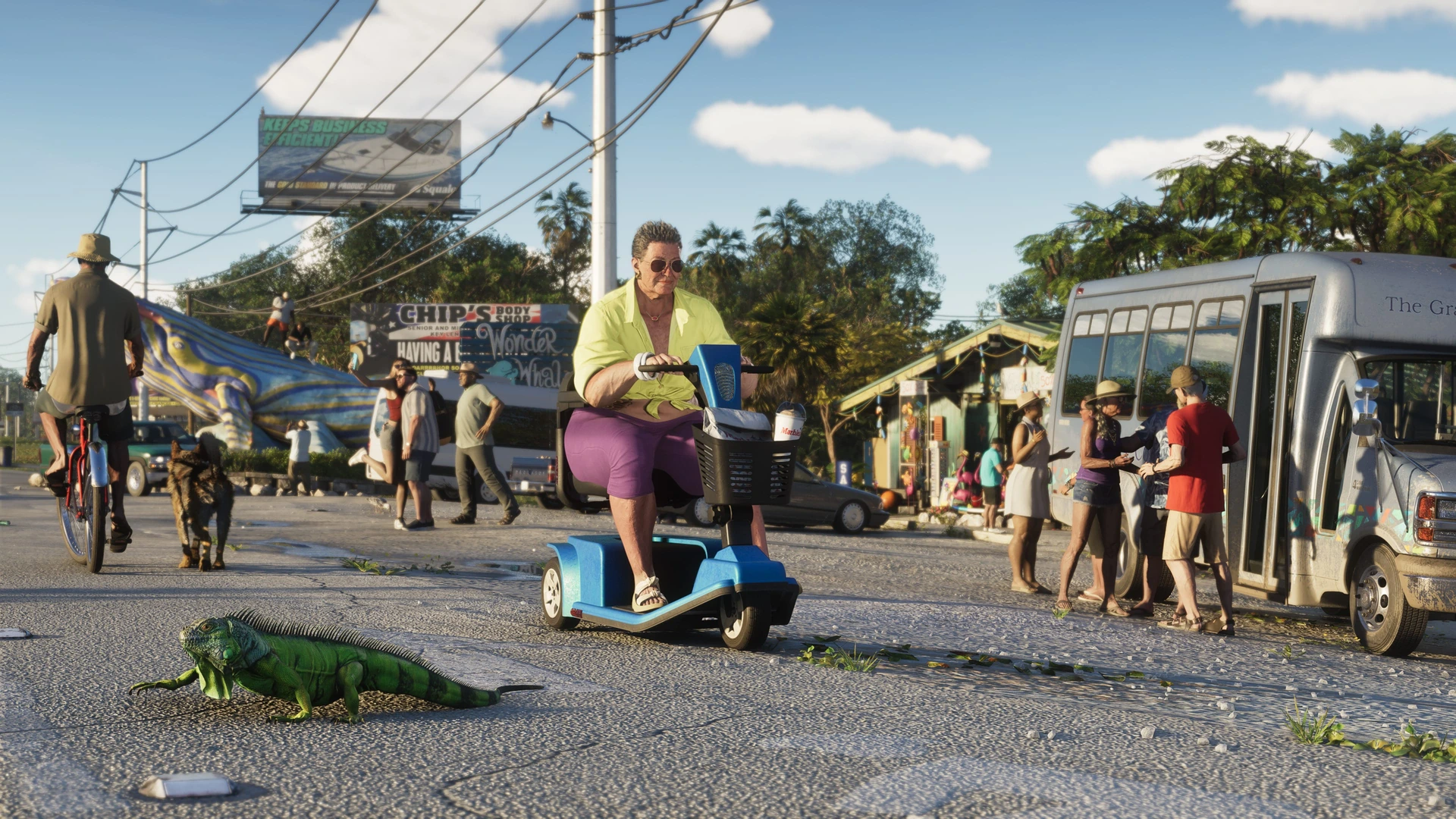
The official material describes the Keys as beautiful and dangerous, relaxed but never completely safe. That contrast can be visible in ordinary movement. Tour boats, fishing vessels, personal watercraft and working docks all compete for space. A high-speed escape through that traffic should create consequences and witnesses, while a slow approach can pass as part of the local routine.
Density should vary between crowded waterfronts and quieter islands. If every beach contains the same activities and every marina sells the same services, the archipelago will feel repeated rather than expansive. Distinct landmarks, water colour, vegetation and settlement patterns can help players navigate naturally. Recognising an island from the horizon is more satisfying than checking the minimap every few seconds.
Police response needs rules that remain readable on water
A wanted system designed only for streets can become confusing at sea. Players need to understand what creates visual contact, how air units search open water and when changing vessel or reaching cover actually breaks identification. An endless ring of instantly spawning boats would erase the value of planning. A response that follows patrol routes, cameras, witnesses and last known direction gives the player something to outthink.
Shore transitions are the critical point. Beaching a boat may provide a fast escape but leave clear evidence and a difficult return. Using a marina is slower yet offers vehicles and crowds. A prepared team can place transport on both sides of a crossing, while an improvised robbery may depend on whatever is tied to the nearest dock. Those differences let the same geography support planned jobs and chaotic free-roam stories.